
Swords
Three of Swords
The Three of Swords gives sorrow, separation, and painful recognition their full emotional weight.
- sorrow
- separation
- hurt
- acknowledgment
Read the card in its own right, then follow its meaning through the spread.
Two orientations
The card’s meaning
The Three brings division into Swords’ world of thought and words, showing their emotional consequences; sorrow is not confined to romance or assigned a required cause.
Upright
The Three of Swords gives sorrow, separation, and painful recognition their full emotional weight.
The Three of Swords concerns hurt that cannot be explained away. A separation, disappointment, difficult recognition, or cutting exchange can bring sorrow even when the facts are clear. The pierced heart places that pain at the center, without making a betrayal or romantic loss the only possible story. Honest acknowledgment matters here: something can hurt without needing to become a lesson immediately, and another person’s hurtful words do not become true because they leave a mark.
- sorrow
- separation
- hurt
- acknowledgment
Reversed
The Three of Swords reversed attends to pain as it is gradually understood and eased.
The Three of Swords reversed turns toward the slow work of living with a hurt differently. Sorrow may be finding words, an apology may become possible, or a painful memory may no longer occupy the whole day. Relief can be uneven, and feelings that return do not erase it. This card allows healing to remain unfinished; it does not require forgiveness, renewed contact, or a claim that the experience happened for a good reason.
- healing
- release
- lingering hurt
- self-kindness
How the reversal changes the emphasis
The movement from acute hurt toward relief is still unfolding; this chosen modern reversal allows partial healing without claiming that grief has ended.
The question changes the emphasis
Reading this card in context
Each spread gives its cards different roles. The examples below explore this card as an influence, a situation or challenge, and advice or support. Begin with the question your position asks, wherever it falls in the spread.
As an influence
Upright
A disappointment, separation, or difficult exchange may have shaped what feels significant now, without determining the whole meaning of the situation.
Reversed
An earlier hurt, a first attempt at repair, or a new way of understanding a painful experience may have influenced the present question.
As a situation or challenge
Upright
Give the specific hurt a name, while distinguishing what actually happened from any wider judgment about worth, blame, or the future.
Reversed
Notice what has begun to ease and what still needs acknowledgment, without using either part to deny the other.
As advice or support
Upright
Allow an honest expression of sadness, seek a listener able to hear it, or protect a little distance from words that deepen the hurt.
Reversed
Choose a form of expression or support that leaves room for mixed feelings, and let any decision about contact remain separate from forgiveness.
Read through a particular life focus
Open reading
Consider what a disappointment or difficult recognition changes emotionally, without requiring an immediate positive interpretation.
Love & relationships
Where a connection holds hurt or separation, attend to what needs acknowledgment without assuming betrayal or deciding whether contact should continue.
Work & direction
A rejected proposal, difficult assessment, or changed direction can deserve acknowledgment before deciding what to do next.
Home & family
Distance, disagreement, or an unmet hope around belonging may call for room to name what hurts without making one person’s version the whole story.
Self-growth
Explore the difference between allowing sadness and turning a painful experience into a lasting judgment of your own worth.
Look a little closer
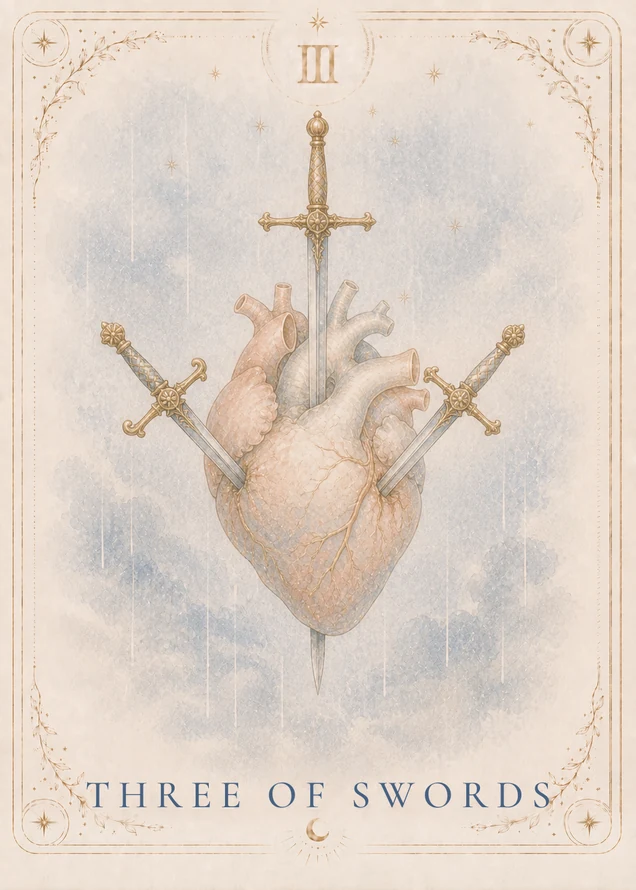
The imagery
Pierced heart
One sword descends vertically through the heart, and two enter diagonally from either side.
The direct joining of heart and blades gives emotional hurt a central place without identifying its cause or predicting a particular event.
Rain
Fine pale lines fall through the cloudy blue-gray background.
Rain supports the image’s sorrowful atmosphere; it does not set a timetable for relief.
Anatomically styled heart
The heart has visible vessels and a modeled surface rather than a simple emblem outline.
The bodily form makes the image feel immediate, while the tarot meaning remains symbolic rather than a medical claim.
Similarities & differences
Related cards
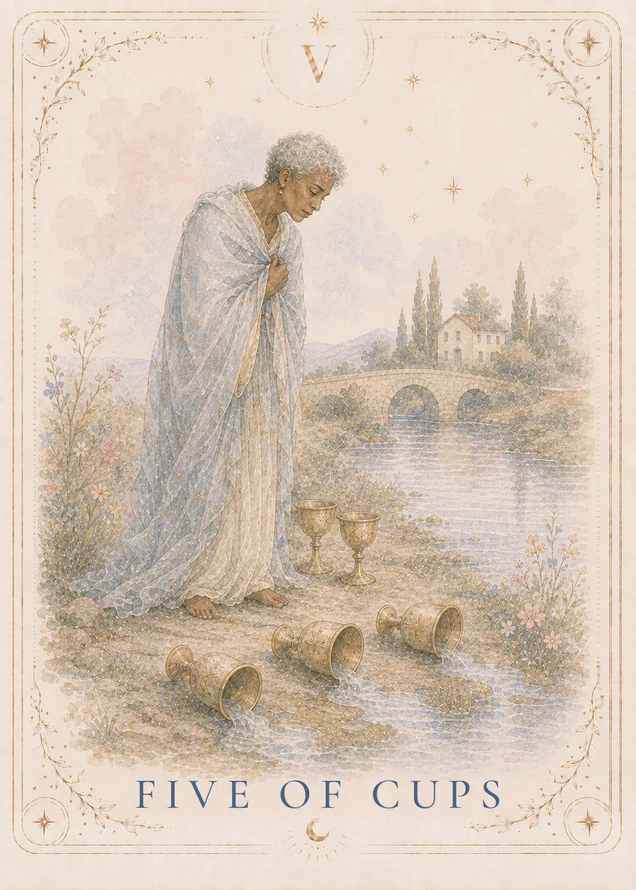
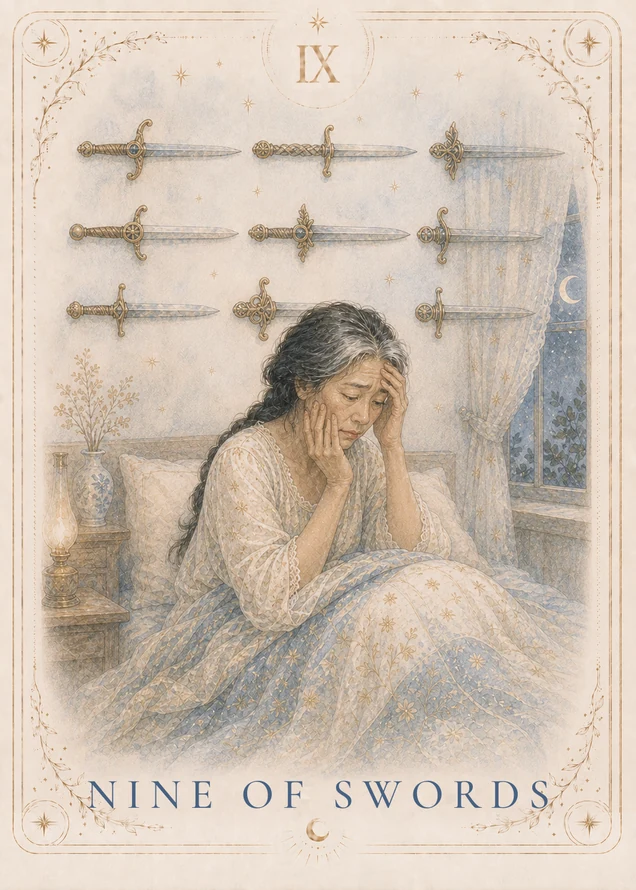
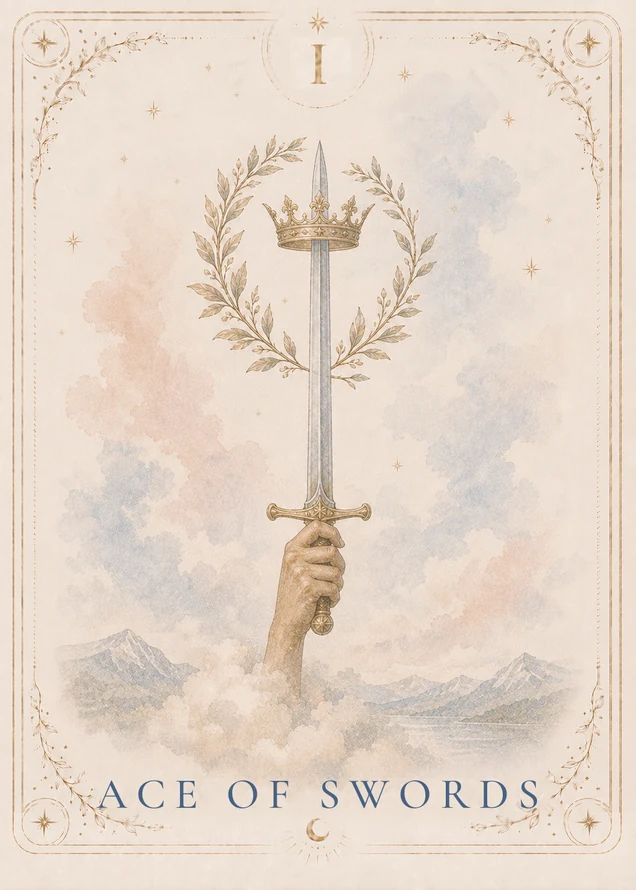
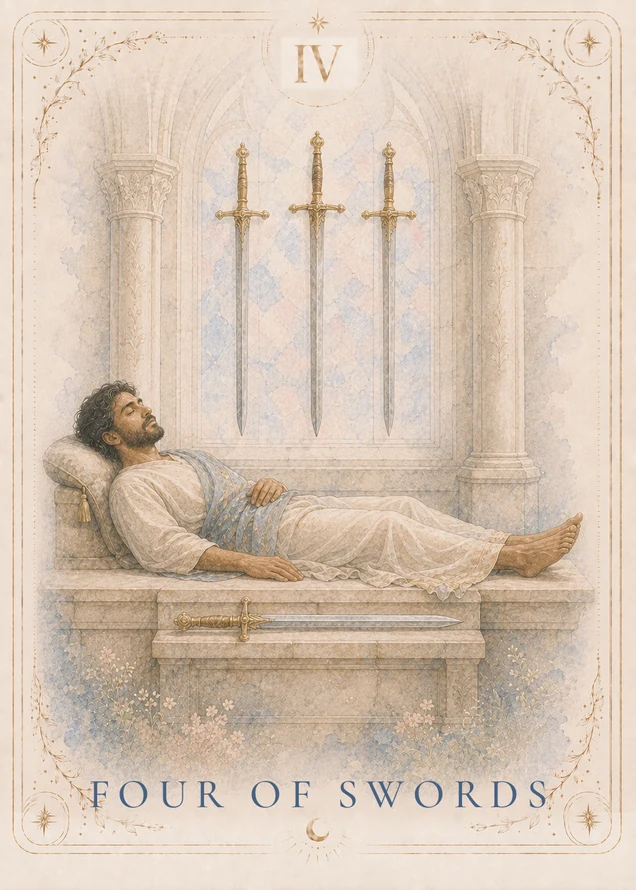
Tradition & Lunaire’s interpretation
The traditional foundation
Waite describes a pierced heart with cloud and rain. His main upright list concerns absence, delay, division, and rupture; his reversal includes error, loss, disorder, confusion, and the dated phrase “mental alienation.” The additional upright entry predicts a lover’s departure for a woman, while its reversal gives an encounter with someone the querent has compromised, as well as a nun.
Lunaire’s reading
Lunaire follows the recognizable RWS center of sorrow and separation without making the image a diagnosis or proof of betrayal. The chosen reversal develops gradual healing, a modern interpretation found in Biddy Tarot, rather than reproducing Waite’s reversed list. Lingering hurt remains possible; forgiveness and a return to contact are separate choices. The historical gendered prediction and religious person-signifier remain in the background rather than becoming claims about a reader.
Read the source in The Pictorial Key to the Tarot ↗
Biddy Tarot: Three of Swords ↗
Waite: additional meanings for Three of Swords (Part III §4) ↗
Arthur Edward Waite. The Pictorial Key to the Tarot. W. Rider; [1911]. Illustrations by Pamela Colman Smith. Source edition details ↗