

Swords
Four of Swords
The Four of Swords makes room for rest, reflection, and a pause from immediate demands.
- rest
- respite
- reflection
- quiet preparation
Read the card in its own right, then follow its meaning through the spread.
Two orientations
The card’s meaning
Swords gives this Four a temporary stillness in thought and response: the blades remain present while activity is suspended, allowing rest or preparation without declaring a lasting resolution.
Upright
The Four of Swords makes room for rest, reflection, and a pause from immediate demands.
The Four of Swords concerns a genuine interval of rest. Thoughts need not be resolved, a reply need not be rehearsed, and every difficulty need not be settled during the pause. Quiet reflection or preparation can happen here, but rest does not have to produce an insight to matter. The swords remain nearby while the figure lies still. The card brings attention to respite and to the time, shelter, or help that makes it possible.
- rest
- respite
- reflection
- quiet preparation
Reversed
The Four of Swords reversed finds rest interrupted, resisted, or difficult to reach.
The Four of Swords reversed describes a pause that does not become restful. Unfinished demands may keep intruding, the mind may keep preparing a reply, or the practical space to stop may be missing. Continuing under strain and finding it hard to settle can belong to the same picture. The card asks what keeps rest out of reach and what could change those conditions. It does not assume that stepping away is a simple choice.
- restlessness
- interrupted rest
- strain
- support
How the reversal changes the emphasis
The upright respite is prevented or remains difficult to receive; this selects the modern restless or unrested reversal rather than treating every reversed Four as a return to activity.
The question changes the emphasis
Reading this card in context
Each spread gives its cards different roles. The examples below explore this card as an influence, a situation or challenge, and advice or support. Begin with the question your position asks, wherever it falls in the spread.
As an influence
Upright
A period of withdrawal, quiet preparation, or interrupted activity may have changed the pace at which the present situation has developed.
Reversed
Repeated interruptions, continuing obligations, or an earlier pause that brought little relief may have made it harder to stop or settle.
As a situation or challenge
Upright
Consider whether there is enough room to rest without continuing to answer the same demands in thought or conversation.
Reversed
Look at what keeps a pause from being restorative, including demands that need another person’s help rather than a different attitude.
As advice or support
Upright
Protect an interval from avoidable interruptions, or ask for practical help with a demand that would otherwise keep the pause out of reach.
Reversed
Identify an interruption that can be reduced, discuss help where it is available, or acknowledge the limits of what a brief pause can provide.
Read through a particular life focus
Open reading
Consider what becomes possible when an immediate response can wait and the interval is allowed to remain quiet.
Love & relationships
Time apart from a difficult conversation may help when the pause is understood and leaves room to return, without requiring silence from someone who needs to speak.
Work & direction
A project, course of study, or decision may benefit from an interval of rest or quiet preparation that need not be justified by greater output afterward.
Home & family
Where rest depends on shared duties or space, consider what arrangement or practical help would make a quieter interval possible.
Self-growth
Notice whether reflection is giving room to settle or becoming another task that has to be completed before rest is allowed.
Look a little closer
The imagery
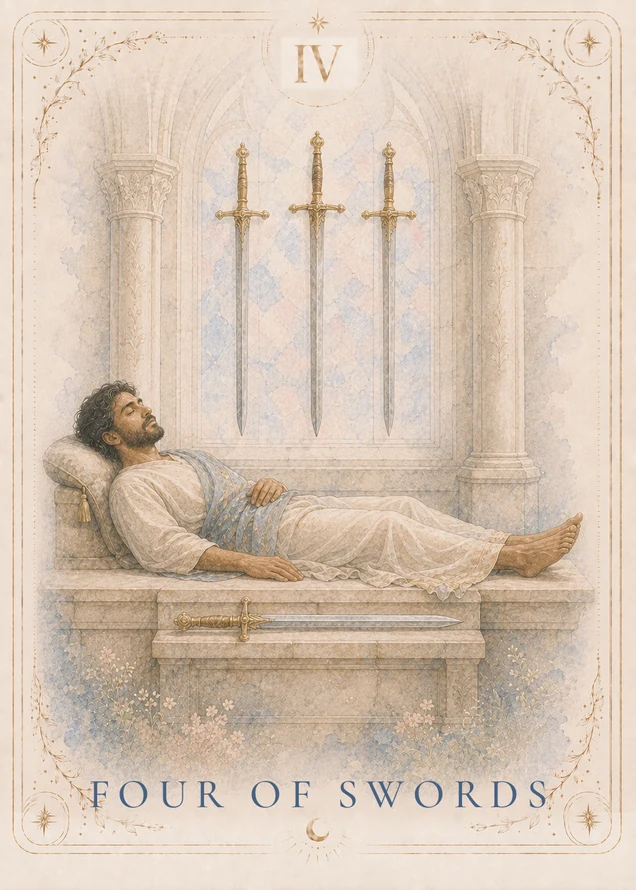
Reclining figure
The figure rests on a cushion with one hand over the torso and the other beside the body.
The posture supports rest and a temporary release from answering demands, without proving illness, death, or the reason for the pause.
Three swords above and one below
Three vertical blades hang within the arch; a separate sword lies along the platform’s front ledge.
The weapons are present but not being used, making room for a pause without suggesting every difficulty has been resolved.
Arch and stone platform
Columns frame the figure and the three suspended swords.
The surrounding structure can suggest a place set apart for quiet; finding such shelter in life may require time, help, or practical arrangements.
Similarities & differences
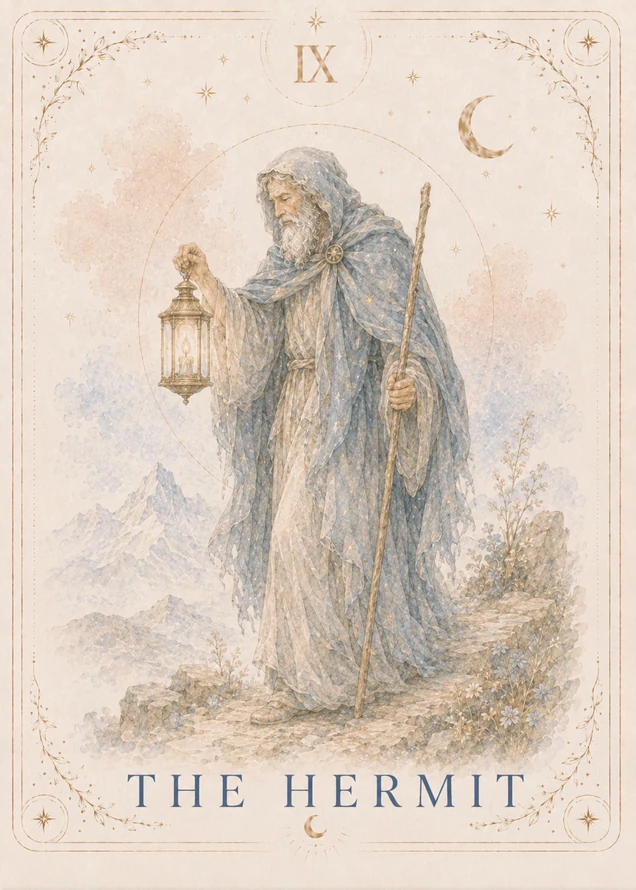
Related cards
Tradition & Lunaire’s interpretation
The traditional foundation
Waite describes a knight’s effigy lying in prayer upon a tomb. His main upright meanings include vigilance, retreat, solitude, repose, exile, tomb, and coffin. His reversed list turns to prudent administration, caution, economy, avarice, and testament. The additional list again links the reversal with success through wise administration, rather than simply making it an unfavorable rest card.
Lunaire’s reading
Lunaire retains retreat, repose, and quiet preparation while treating the death-related historical imagery symbolically, not as a prediction. The native figure is robed with separated hands, while Waite describes a knight’s effigy in prayer. The chosen reversal follows the modern reading of restless or obstructed rest, found in Biddy Tarot, rather than Waite’s administrative list; his favorable alternative remains documented.
Read the source in The Pictorial Key to the Tarot ↗
Waite: additional meanings for Four of Swords (Part III §4) ↗
Arthur Edward Waite. The Pictorial Key to the Tarot. W. Rider; [1911]. Illustrations by Pamela Colman Smith. Source edition details ↗