
Major Arcana
The Emperor
The Emperor grounds authority in structure, anchoring fleeting impulse with lasting responsibility.
- structure
- authority
- stability
- responsibility
Read the card in its own right, then follow its meaning through the spread.
Two orientations
The card’s meaning
The Emperor concerns the organization of authority and responsibility across a situation: what holds a course steady, who sets its terms, and who answers for the consequences. Its structure can support relationships and projects as readily as formal leadership.
Upright
The Emperor grounds authority in structure, anchoring fleeting impulse with lasting responsibility.
The Emperor concerns structure, authority, and the responsibility that makes stability possible. Clear roles, dependable rules, and decisions made with regard for their consequences can protect what depends on them. Its authority is practical: people can understand the terms, know who is responsible, and rely on what has been agreed. Strength lies in keeping decisions consistent and remaining answerable to the people and circumstances they affect.
- structure
- authority
- stability
- responsibility
Reversed
The Emperor reversed finds structure hardened into control, with authority separated from the responsibility that should guide it.
The Emperor reversed concerns authority that has become rigid, controlling, or unwilling to answer for its effects. A rule may outlast its usefulness, control may be treated as proof of competence, or a leader may demand deference while avoiding responsibility. Inconsistent or selectively enforced rules can also make authority difficult to question. The issue is how power is being exercised and whether those setting the terms share responsibility for its consequences.
- rigidity
- overcontrol
- brittle order
- misused authority
How the reversal changes the emphasis
Structure still has a purpose here. The question is whether order serves that purpose and authority remains answerable to its effects.
The question changes the emphasis
Reading this card in context
Each spread gives its cards different roles. The examples below explore this card as an influence, a situation or challenge, and advice or support. Begin with the question your position asks, wherever it falls in the spread.
As an influence
Upright
A long-standing rule, protective role, or need for stability may have laid the ground on which the present question now rests.
Reversed
An inflexible or selectively enforced rule, or an earlier struggle over authority, may still get to decide what feels permitted, protected, or possible.
As a situation or challenge
Upright
Look at who sets the terms, what those terms protect, and whether the structure creates reliability or only compliance.
Reversed
Look at how rules are applied, who can question them, and whether those setting the terms are answerable for the effects.
As advice or support
Upright
Clarify a responsibility you can take on, including its limits, and make the decisions attached to it consistently.
Reversed
Clarify who is responsible for the decision and its effects, then consider what rule you can revise or question.
Read through a particular life focus
Open reading
Look at who can decide, what each person is responsible for, and which terms make the situation dependable enough to work with.
Love & relationships
Consider how decisions and responsibilities are shared, and whether the agreements give each person a clear place in the relationship.
Work & direction
Clarify the decisions within your remit, the responsibilities attached to them, and what others can reliably expect from you.
Home & family
Look at the roles and routines that support daily life, including who maintains them and how a rule can be questioned or revised.
Self-growth
Consider which structure helps you follow through on a chosen responsibility and whether it can adjust when circumstances change.
Look a little closer
The imagery
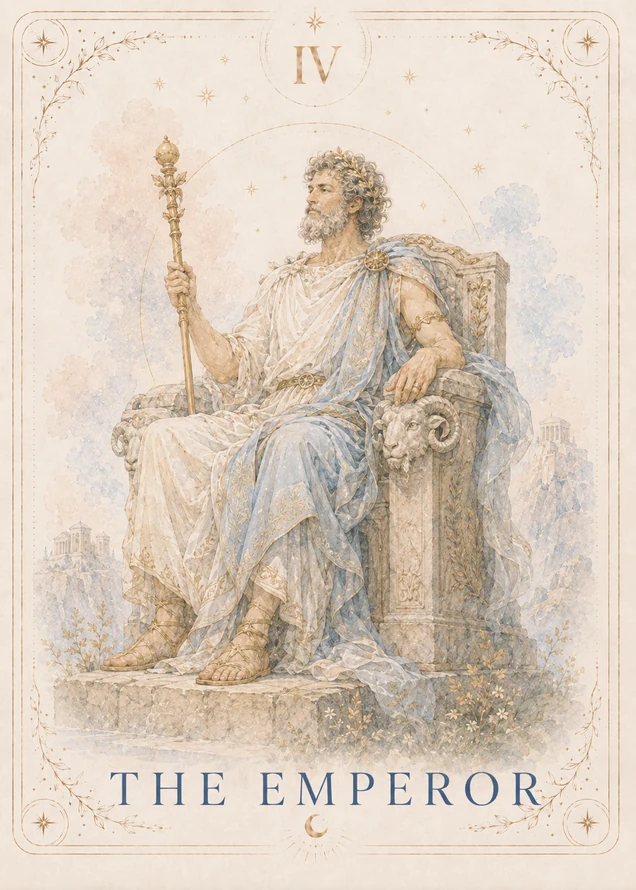
Stone throne and ram heads
The seated figure rests on a carved stone throne whose armrests end in curled ram heads.
Stone suggests durability; the ram heads bring will and force into that structure, asking whether authority can make power answerable to responsibility.
Tall gold scepter
The figure holds a long gold scepter upright beside the throne.
Authority becomes meaningful through use; a role or title matters when it organizes responsibility into action.
Mountain temples
Small stone temples rise on pale mountain ledges behind the throne.
Stability is constructed over time. A higher vantage can widen judgment without making it infallible.
Similarities & differences
Related cards
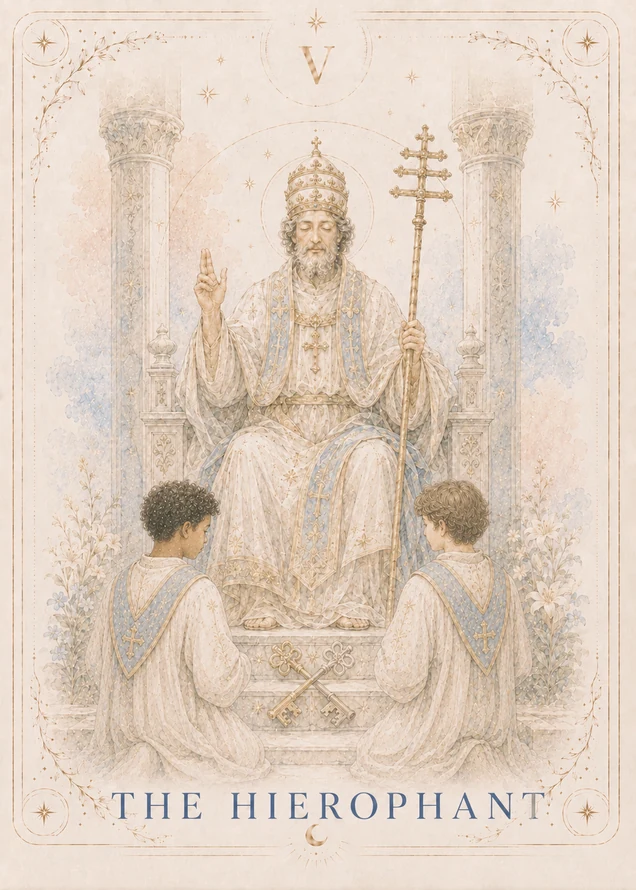
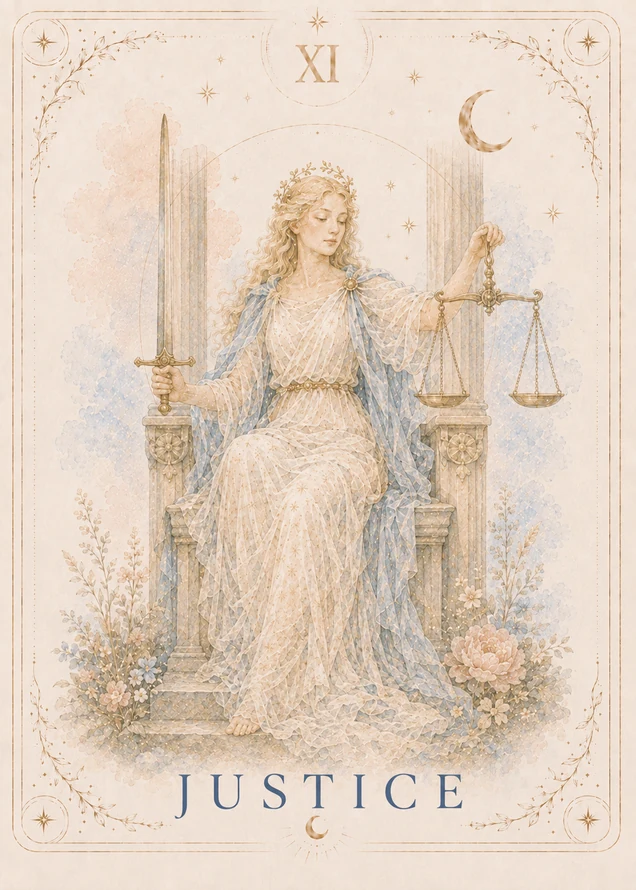
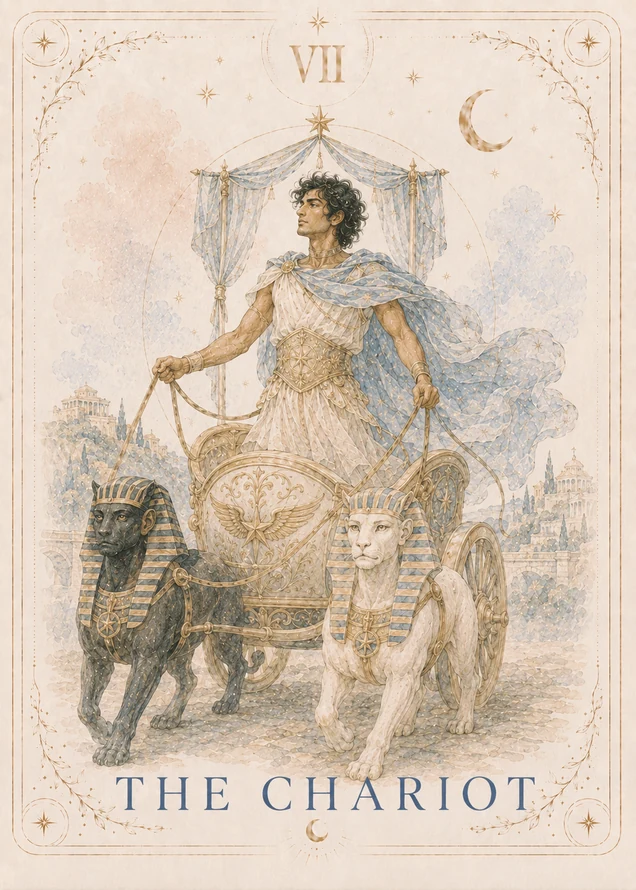
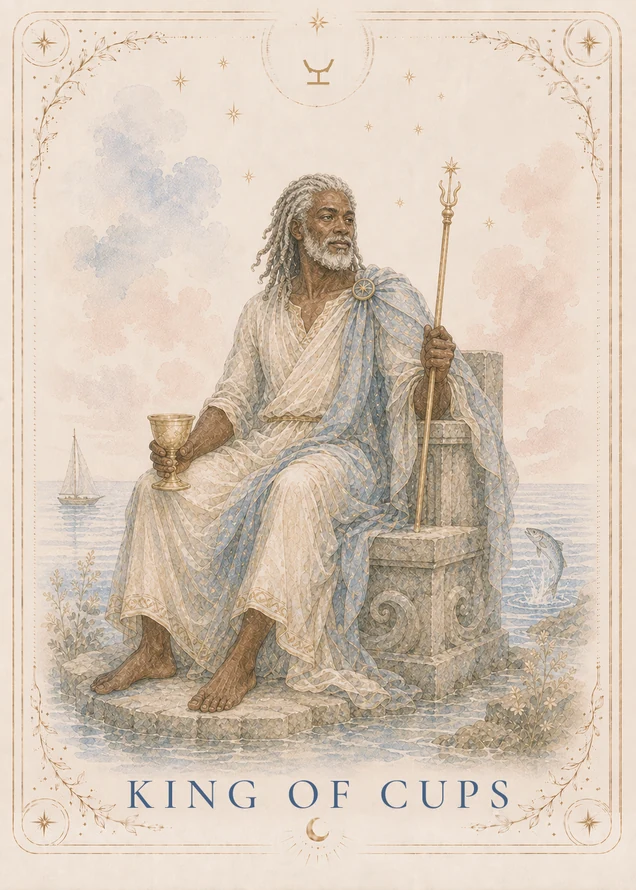
Tradition & Lunaire’s interpretation
The traditional foundation
A. E. Waite, The Pictorial Key to the Tarot, Part II §2, The Emperor: worldly authority, executive power, and realization, with a ram-headed throne; compare the separate Part III §3 divinatory entry.
Lunaire’s reading
Lunaire keeps authority, protection, stability, and the ability to establish order, giving their responsible exercise a clear modern emphasis. The selected excess reversal concerns rigidity, overcontrol, and selective enforcement. This is an established Lunaire interpretation rather than a claim that Waite’s reversed list is wholly about oppressive authority.
Read the source in The Pictorial Key to the Tarot ↗
Arthur Edward Waite. The Pictorial Key to the Tarot. W. Rider; [1911]. Illustrations by Pamela Colman Smith. Source edition details ↗