

Swords
Knight of Swords
A clear purpose puts thought into swift, decisive, and courageous action.
- conviction
- decisive action
- quick thought
- courage
Read the card in its own right, then follow its meaning through the spread.
Two orientations
The card’s meaning
The Knight puts the thought and language of Swords into active pursuit. It is an approach available without a particular age, gender, profession, or temperament; directness and courage need not become aggression.
Upright
A clear purpose puts thought into swift, decisive, and courageous action.
The Knight of Swords brings an idea into motion with speed and conviction. A question is taken up directly, an argument made clearly, or a necessary response pursued without waiting for perfect ease. There is courage in committing thought to action, and skill in choosing the moment and the words. This Knight can think while moving. Decisiveness serves the purpose best when new information can still change the route and disagreement does not automatically become a contest.
- conviction
- decisive action
- quick thought
- courage
Reversed
The force of a conviction can send action ahead of understanding.
The Knight of Swords reversed describes a rush to act on a thought before its consequences have been considered. A forceful reply can become an attack, or a single objection can send the whole effort into argument. Speed then serves the urge to prevail more than the question itself. The needed pause has a purpose: understand what is being answered, choose words that address the issue, and leave others room to speak. Conviction can remain strong without carrying every disagreement into battle.
- haste
- forceful argument
- imprudence
- reflection
How the reversal changes the emphasis
The Knight’s speed and conviction become excessive when they outrun reflection or treat opposition as something to defeat. This develops Waite’s reversed imprudence without defining the upright Knight as reckless or identifying a hostile person.
The question changes the emphasis
Reading this card in context
Each spread gives its cards different roles. The examples below explore this card as an influence, a situation or challenge, and advice or support. Begin with the question your position asks, wherever it falls in the spread.
As an influence
Upright
A pressing question, a strongly held idea, or a decisive intervention may have brought this situation into motion.
Reversed
A rushed reply, a drive to settle an argument, or action taken before checking its effects may still influence the present question.
As a situation or challenge
Upright
Clarify the purpose of acting now and the information that would justify changing the proposed course while it is underway.
Reversed
Look at whether the proposed response addresses the actual issue or mainly tries to overcome the resistance it has met.
As advice or support
Upright
Make the next move specific enough to carry the idea forward, with room to hear a useful correction along the way.
Reversed
Read the whole message or clarify the objection before acting, then choose a response whose force fits what needs doing.
Read through a particular life focus
Open reading
A question may benefit from a clear position and a deliberate next move, with enough attention to change course when the evidence changes.
Love & relationships
Direct words can clarify a connection when they leave room for an answer, rather than treating agreement or an immediate response as something to win.
Work & direction
A focused argument or timely action may advance an undertaking, provided the proposed move addresses the actual problem.
Home & family
In private life, a pressing concern may be easier to address when urgency is attached to a specific question rather than to the whole conversation.
Self-growth
A strong idea can be tried through action while remaining open to what the attempt reveals.
Look a little closer
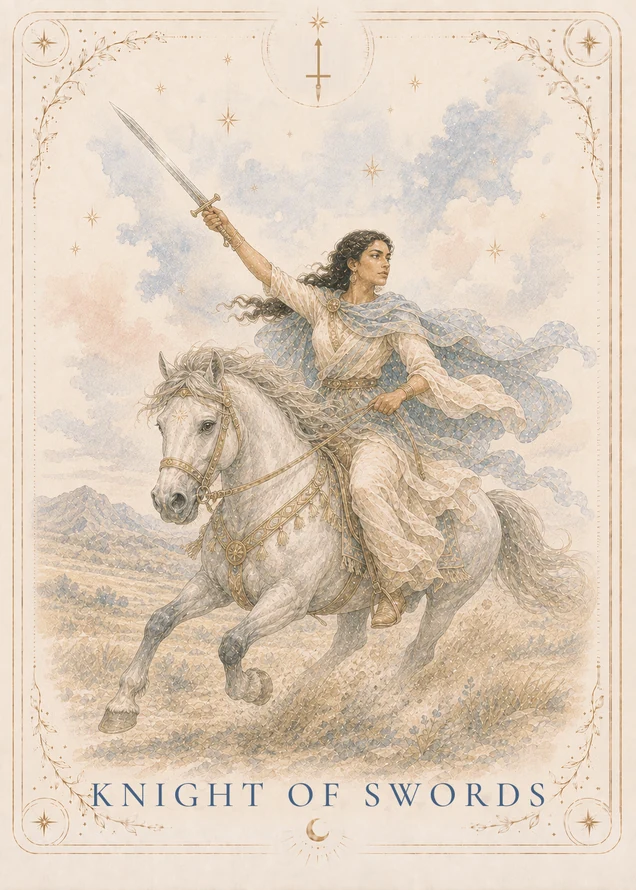
The imagery
Raised sword
The rider holds a long sword high and diagonally, away from the horse.
The raised blade can express a thought or conviction being carried into action.
Moving horse and reins
The pale horse stretches into a running stride while the rider holds its reins with the other hand.
Speed and guidance appear together, supporting purposeful movement without making recklessness the Knight’s only possibility.
Turned face and streaming cloak
The rider looks to the right of the image as the horse points left, and the blue cloak extends behind the rider.
The active scene allows for alertness as well as momentum; the differing directions do not establish an unseen opponent or destination.
Similarities & differences
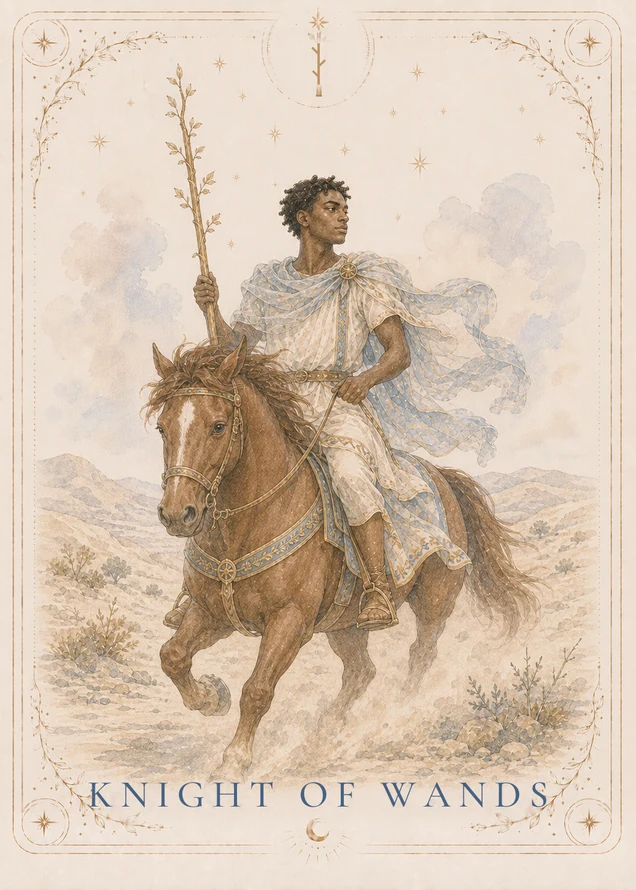
Related cards
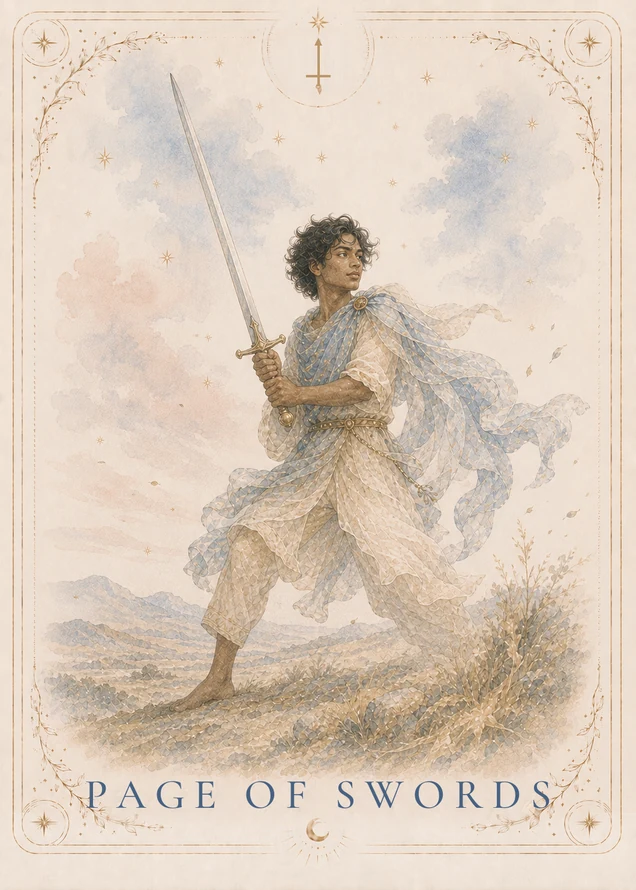
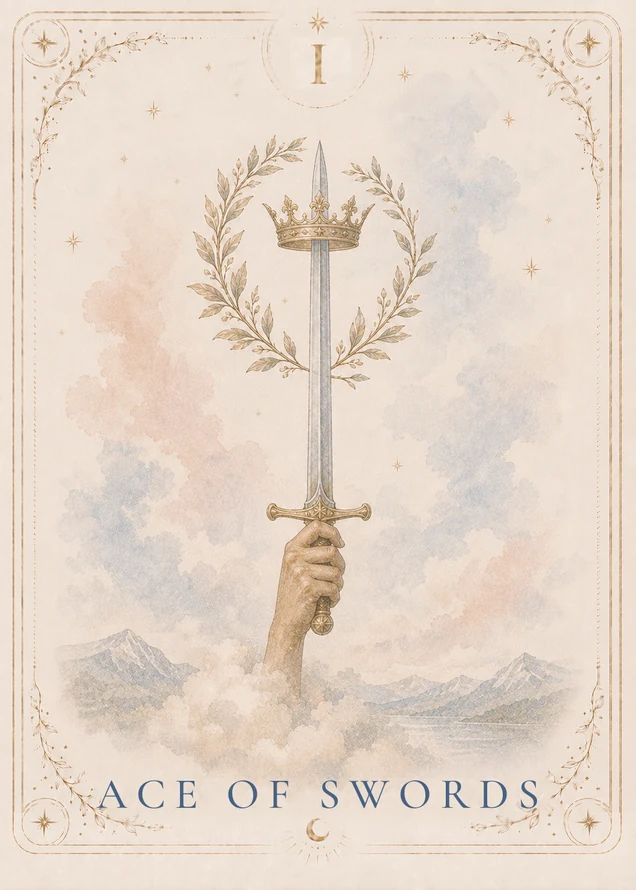
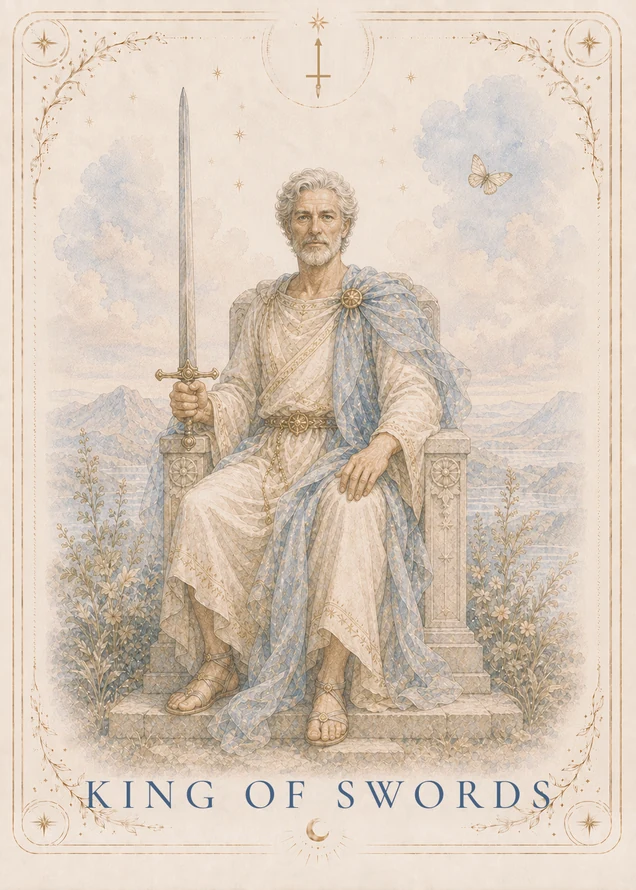
Tradition & Lunaire’s interpretation
The traditional foundation
Waite describes a swift rider through chivalric heroism. His upright list includes skill, bravery, defense, and effective action alongside hostility, war, destruction, and resistance; a death association is conditional on neighboring cards. Reversed, he names imprudence, incapacity, and extravagance. His additional upright entry uses military roles and predicts heroism; the reversed entry predicts disputes and a gendered victory over a rival.
Lunaire’s reading
Lunaire retains purposeful mental action and courage while treating haste and combative force as the selected excess. The contemporary emphasis on fast thought and action is also present in Biddy Tarot’s Knight interpretation. Neither historical warfare nor the conditional fatality reading becomes a forecast, and the court does not identify an enemy, soldier, rival, or reckless personality.
Read the source in The Pictorial Key to the Tarot ↗
Biddy Tarot: Knight of Swords ↗
Waite: additional meanings for Knight of Swords (Part III §4) ↗
Arthur Edward Waite. The Pictorial Key to the Tarot. W. Rider; [1911]. Illustrations by Pamela Colman Smith. Source edition details ↗