



Pentacles
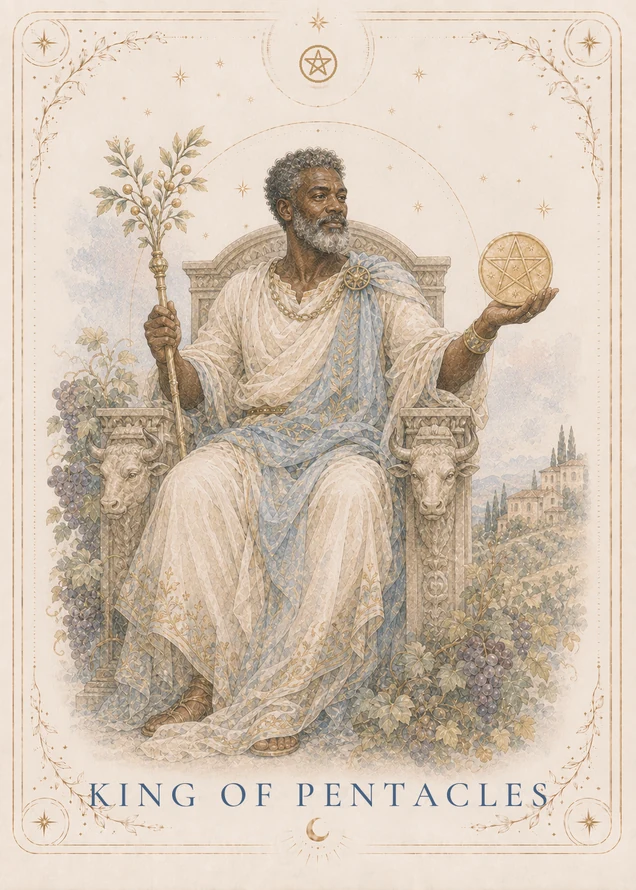
King of Pentacles
Practical mastery builds lasting security, with enough steadiness to provide, share, and enjoy.
- competence
- stewardship
- security
- generosity
- enjoyment
Read the card in its own right, then follow its meaning through the spread.
Two orientations
The card’s meaning
The King expresses practiced responsibility in the material domain: building, managing and sustaining resources so that support can be counted on. Discernment, generosity and enjoyment grow through that practice. It is available to any person; age, gender, wealth and formal rank do not establish it. Shared themes with other cards are expected, and these comparisons describe emphasis rather than exclusive meanings.
Upright
Practical mastery builds lasting security, with enough steadiness to provide, share, and enjoy.
The King of Pentacles knows what it takes to make something prosper and keep it going. Experience becomes practical judgment: choosing well, caring for resources, and making promises that can be kept. This is the skill of building enough stability for other things to flourish—a business, a household, a shared undertaking. The coin sits on an open palm. What has been built can offer dependable support, be shared with confidence, and leave room to enjoy its fruits.
- competence
- stewardship
- security
- generosity
- enjoyment
Reversed
The pursuit of more can pull practical success away from security, generosity, and care.
The King of Pentacles reversed can turn a good living into an endless tally. More is earned, made, or acquired, while the purpose of that effort grows faint. A house can be impressive and uncomfortable to live in; a harvest can be large and never shared. This card asks whether skill and resources still provide security and support, or whether keeping the numbers rising has become the work. The ability to build remains, while the responsibility for what it sustains slips from view.
- accumulation
- status
- misplaced priorities
- stewardship
How the reversal changes the emphasis
The ability to build and manage material resources becomes directed toward having or proving more. This excess lens follows one established modern interpretation; misuse, rigidity or unreliable stewardship are other possible readings, rather than meanings disproved by this choice.
The question changes the emphasis
Reading this card in context
Each spread gives its cards different roles. The examples below explore this card as an influence, a situation or challenge, and advice or support. Begin with the question your position asks, wherever it falls in the spread.
As an influence
Upright
A practiced skill, a steady source of support, or careful use of resources may have made the present possibility easier to sustain.
Reversed
If success has mainly meant accumulation or status, that priority may have shaped how resources are used and what receives attention.
As a situation or challenge
Upright
Look at what can be sustained with the resources and experience available, and where a dependable commitment would make a difference.
Reversed
Consider what success provides in daily life: dependable support, room to enjoy what has been built, or mainly more to count and display.
As advice or support
Upright
Use what experience has taught you to make a promise you can keep, tend the resources it needs, and leave room to enjoy and share the benefits.
Reversed
Give resources a clear purpose again: decide what needs maintaining, what support can be offered reliably, and what would be enough.
Read through a particular life focus
Open reading
Practical experience and careful use of resources may show how something promising can become dependable.
Love & relationships
In questions of closeness, care may take the form of reliable practical support, with commitments that can actually be sustained.
Work & direction
Experienced judgment can be considered through what it builds, how well it manages resources, and whether the result can keep supporting worthwhile work.
Home & family
The practical work of maintaining a home or shared resource may reveal how security is built and how its responsibilities and benefits are shared.
Self-growth
A practiced skill or sound habit of managing resources may create room for greater steadiness, generosity and enjoyment.
Look a little closer
The imagery
Pentacle on the open palm
A gold pentacle rests on the seated figure’s outstretched palm.
Resources can be held with enough confidence to be put to use and shared.
Bull-headed throne
The stone armrests end in carved bull heads.
A steady presence supports practical responsibility; firmness gains meaning through what it can sustain.
Grapes and leafy scepter
Clusters of grapes surround the throne, and the scepter ends in a leafy branch with round fruit.
Cultivation becomes visible in what continues to bear fruit, joining enjoyment with the work of upkeep.
Similarities & differences
Related cards
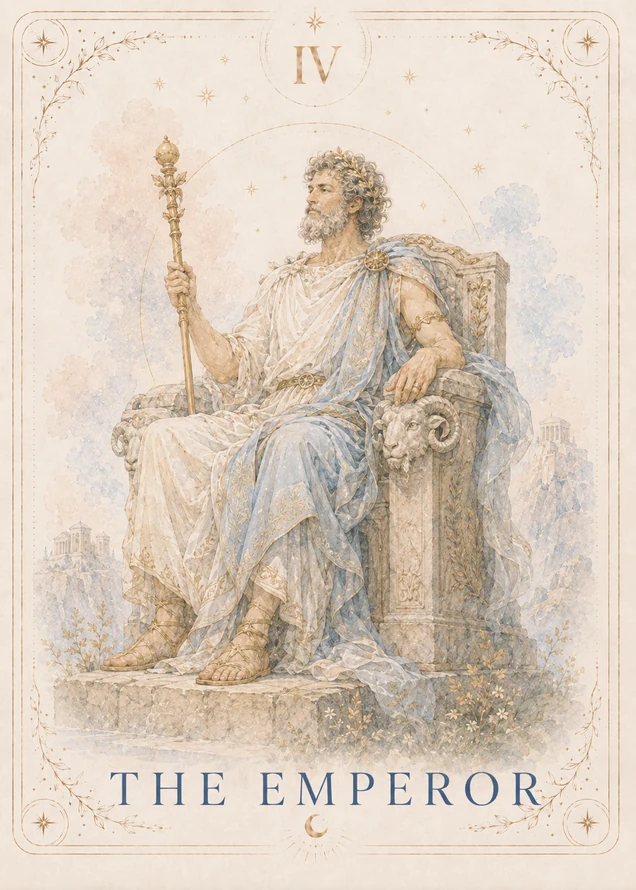
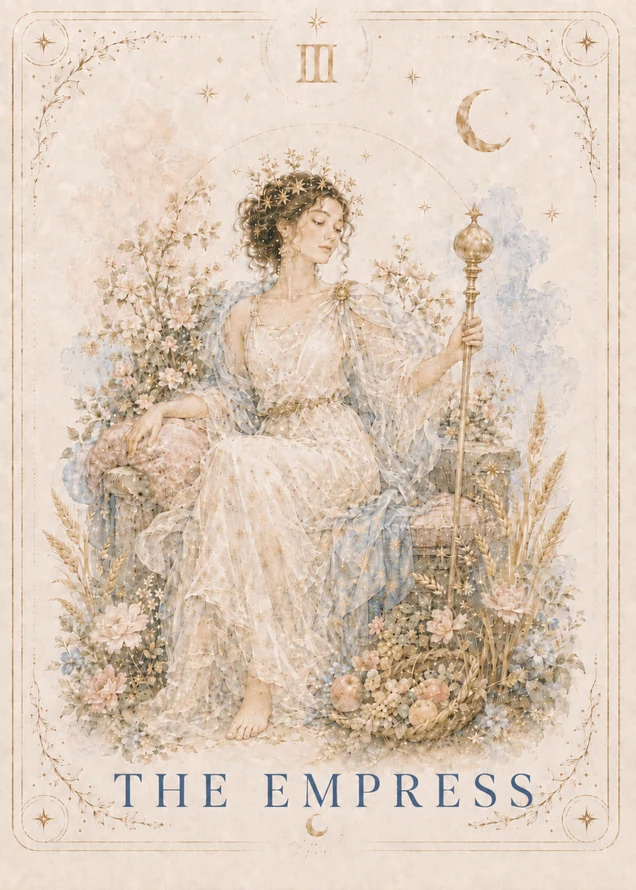
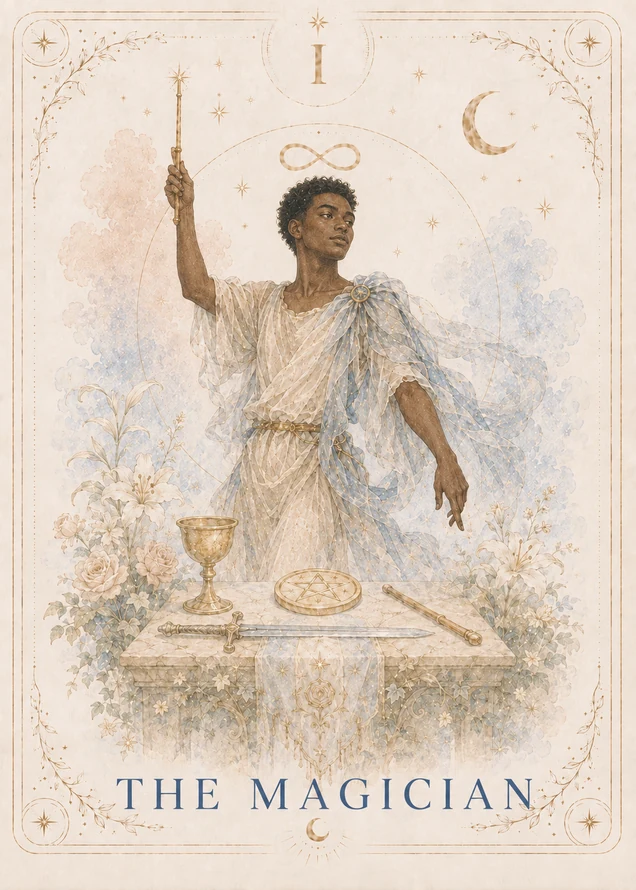
Tradition & Lunaire’s interpretation
The traditional foundation
Waite’s Part III §2 associates the King with valour, practical and intellectual aptitude, mathematical gifts and attainment, and notes the bull imagery. His pictorial description assigns a dark appearance and links it to courage and a somewhat lethargic temperament; these are Waite’s historical judgments. The reversed list is strongly condemnatory, including vice, corruption and peril. His §4 additional list assigns a dark male appearance and the roles of merchant, master or professor upright, and an old man condemned as vicious reversed.
Lunaire’s reading
Lunaire retains practical competence and attainment as the center, expressed through responsible management, lasting security and dependable provision. Modern stewardship, generosity and enjoyment develop that center without promising wealth or assuming a provider relationship. Courage remains an available traditional association, while this core develops practical mastery, security and provision. The reversal selects the established modern excess of accumulation or status displacing sound stewardship; it is one reflective lens, not an exhaustive account of reversals or a reproduction of Waite’s condemnatory list. Historical appearance, age and temperament claims describe Waite’s system, not literal findings about this deck or a way to classify a reader.
Read the source in The Pictorial Key to the Tarot ↗
Waite: additional meanings for King of Pentacles (Part III §4) ↗
Arthur Edward Waite. The Pictorial Key to the Tarot. W. Rider; [1911]. Illustrations by Pamela Colman Smith. Source edition details ↗