You have a question that has not quite formed a sentence. You do not need to make it one. In Lunaire’s three-card tarot reading, you choose a focus, turn three cards, and see what their images have to say about it.
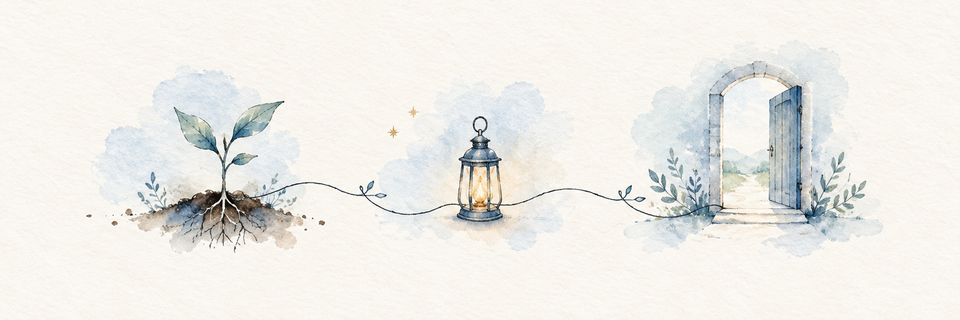
The spread uses three different cards drawn at random from the 22 Major Arcana. The first card looks toward an influence still present. The second asks what deserves attention now. The third offers something you might try. This is a reflection, not a timetable for what happens next.
Why start with a three-card beta?
This is Lunaire Tarot’s first beta. We chose one three-card Major Arcana spread because those 22 richly pictured figures give a reading real range, while a small, consistent shape lets us pay close attention to how the positions, reversals, focus, and connecting prose work together. It is a complete reflection you can use now, and a place to learn from the readings before making the deck larger.
We intend to grow toward the full 78-card deck and other spreads, including a single-card reading, a past/present/future spread, and a Celtic Cross. Each needs its own artwork, meanings, and means of joinder, so there is no date promised here.
What do the three tarot card positions mean?
What shaped this is the root of the question: a past choice, a habit, or a condition that still has a hand on the story. It does not require you to excavate your whole history.
What is asking for attention is the center of the spread. It may name a tension you have been walking around, or put an ordinary decision in a different light.
What may help offers a posture, perspective, or next small act. It is not a guaranteed outcome. If The Hermit appeared here, for example, the help might be a little time away from other people’s noise before you answer. That is different from predicting that you will be alone.
The order matters. A card in the first position and the same card in the third would ask different questions. And the relationship between cards matters more than a stack of three isolated definitions. The Fool’s open cliff edge beside the Emperor’s stone throne makes a different conversation from the Fool beside the Star’s steady water. Our two-part introduction to the Major Arcana begins with that first cast of characters and continues from Justice to the World.
How should you choose a focus?
Choose the part of life where you want to listen. Open Reading leaves the circumstance unnamed. Love & Relationships brings the cards into the realm of contact, choice, and how people treat one another. Work & Direction considers effort and decisions. Home & Family looks at routines, roles, and care. Self & Growth makes space for a private pattern or a manageable change.
There is no prize for selecting the most serious lens. If the question is broad or you are unsure where it belongs, choose Open Reading. If it concerns a conversation with a partner, Love & Relationships may give the language a useful place to land. The focus does not change which cards are drawn. It shapes only the reading’s everyday application, and is set when you turn the first card. You do not type your question into Lunaire.
What does upright or reversed mean?
Every drawn card can arrive upright or reversed. A reversal is not a bad card or the opposite of its upright meaning. It may turn a quality inward, show it meeting resistance, or ask what happens when it has been stretched too far. Strength reversed, for instance, might find courage working so hard to stay composed that it has nowhere to rest. The lion is still there; the relationship to it has changed.
Turn a card once to see its artwork, then again to read its meaning and its place in the spread. When all three are open, Lunaire writes a connected reading from those particular cards, orientations, positions, and the focus you chose. The account of where our tarot meanings come from expands upon the editorial work beneath that prose.
If a line stays with you, sit with it (and save it if you’d like). If it does not, the cards have not failed a test. A useful reading leaves you with a clearer question, not an order to obey. That is also how we approach the sky: measure what is there, then let the interpretation speak in its own register. Tarot begins with a draw rather than an ephemeris, but it deserves the same reserve about what the source can and cannot say.